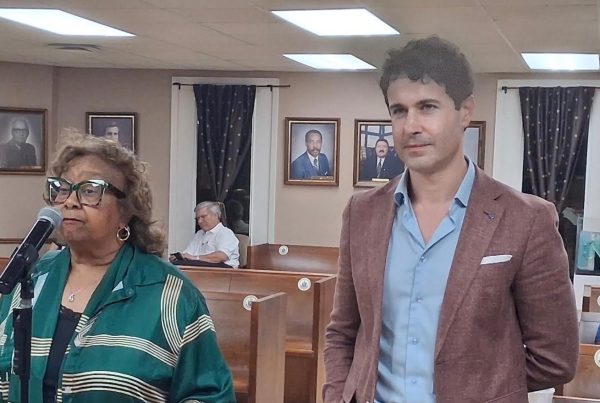
Photograph: Patrice Melnick, Opelousas Museum and Interpretive Center Director. (Photograph by Bobby Ardoin)
BOBBY ARDOIN
Editor/Consulting Writer
The heating and air conditioning units inside the Opelousas Museum and Interpretive Center have apparently begun displaying the type of antiquity that can be found in many of the exhibits that executive director Patrice Melnick enjoys displaying daily inside the museum building.
If city officials continue delaying the purchase for a pair of new heating and air conditioning units at the museum Melnick says she is afraid that many of the artifacts available for viewing will continue deteriorating.
Melnick had her estimated $24,000 purchase requests for new units denied on Thursday night as members of a Budget Committee decided to take the matter under advisement.
Shortly after deciding to take the museum air and heating units request as a possible matter for future discussion, the Committee agreed to recommend a $500,000 American Rescue Act expenditure for a new elevator and other improvements at the Opelousas Public Library located half a block away.
Her appearance before the Committee was the second time that Melnick has appealed to city officials to finance replacements for the units which Melnick said are now 21 years old and practically irreparable.
During a Board of Aldermen meeting in March and again Thursday night Melnick admitted that there is not enough funding in the museum budget to pay for new units.
Melnick said again during the Committee appearance, that buying a new heating and cooling system should be considered a long-term investment that will help preserve the items now located in the museum building owned by the city.
Having a climate-controlled museum, Melnick told the Committee, is essential for preserving the items that should be considered delicate and that normally attract visitors.
“Many of the artifacts that we have won’t survive if they are not placed in a controlled environment. Right now we have a temporary compressor that keeps the museum from becoming too hot,” Melnick pointed out to the Committee.
Melnick said she thinks it’s important for the city to become proactive rather than reactive in providing better atmospheric conditions at the museum.
Currently Melnick says she often notices water dripping inside the building due to extensive condensation from humidity in addition to mildew forming around the air dispersal vents.
Since being selected as the museum director in 2022, Melnick has obtained several state and federal grants which have allowed her to sponsor a number of events at the museum.