Revolutionary-Era Dancers Entertain
BOBBY ARDOIN
St. Landry Now.com Editor
Accordions, rubboards and two-step Zydeco partners were absent from the dance floor on Saturday.
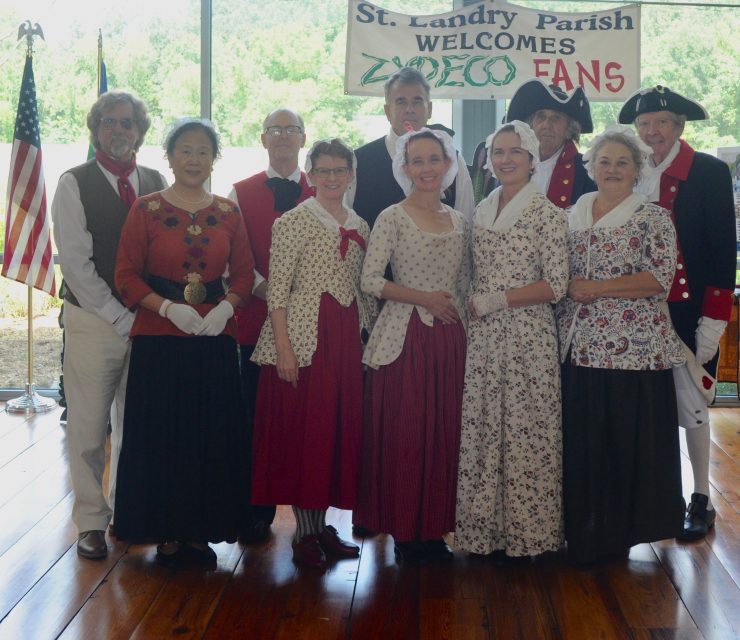
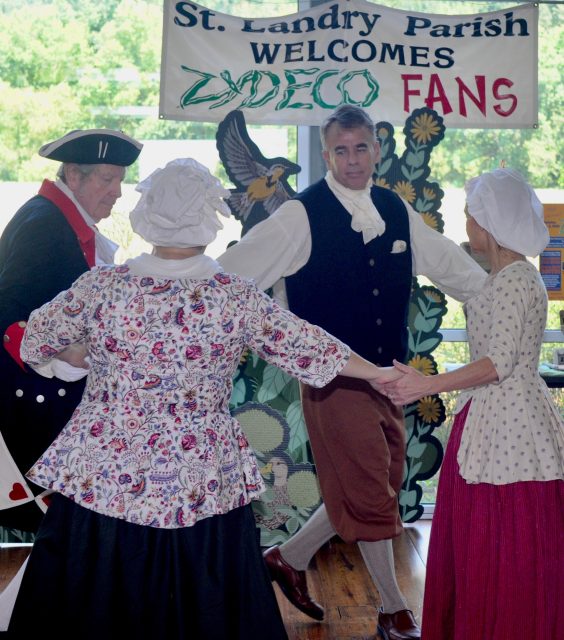
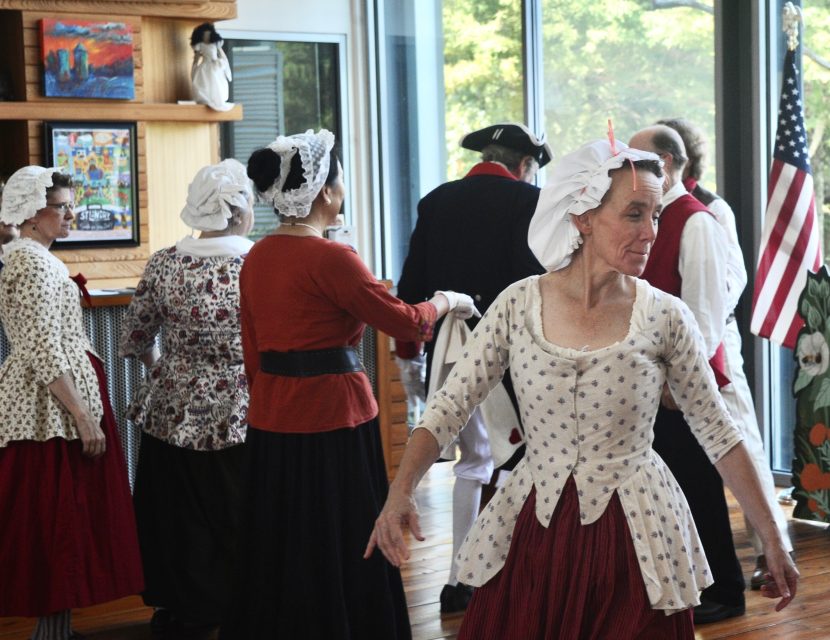
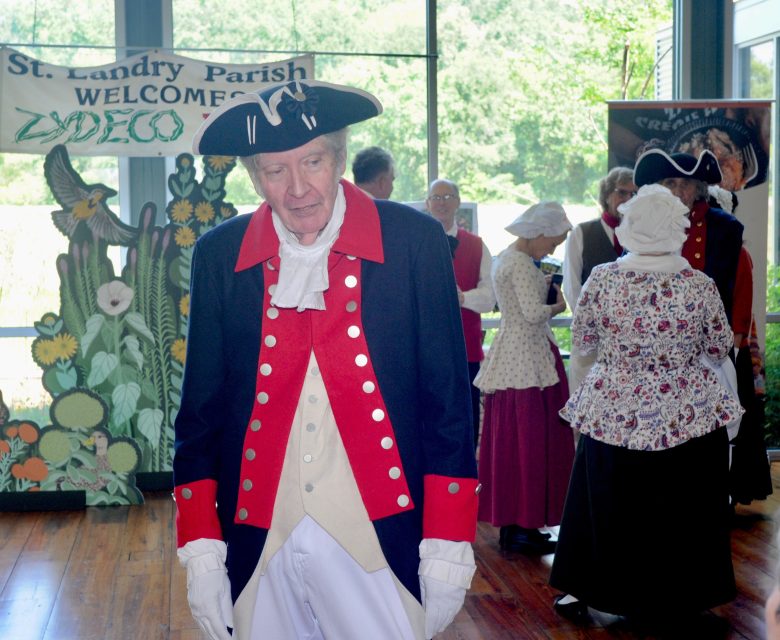
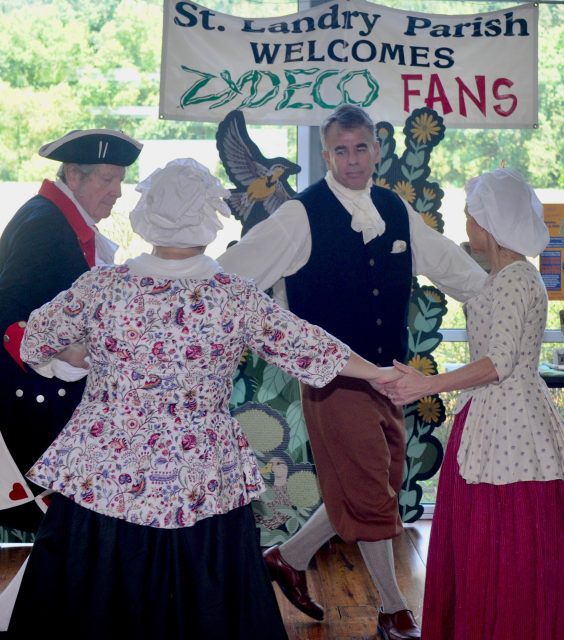
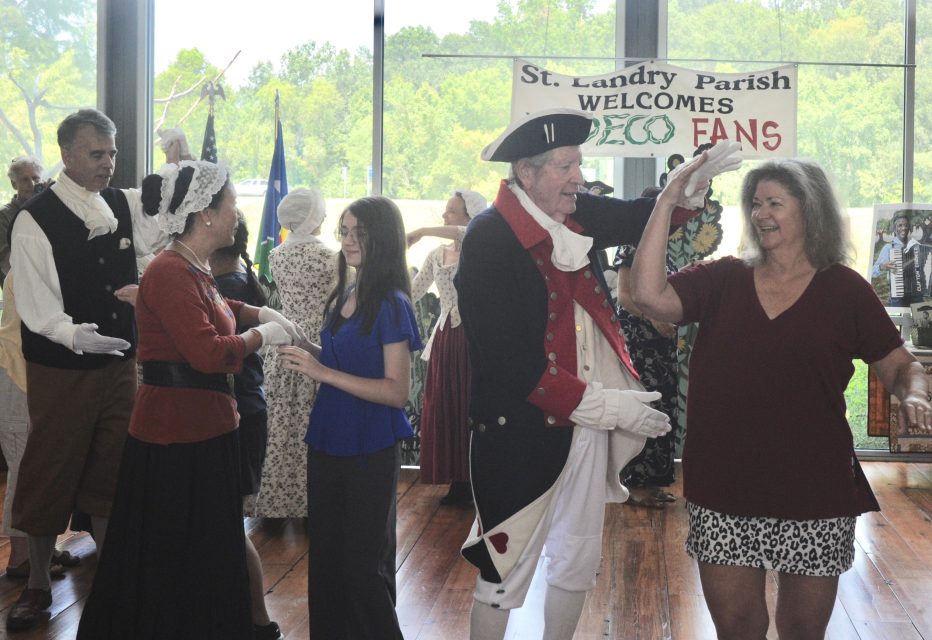
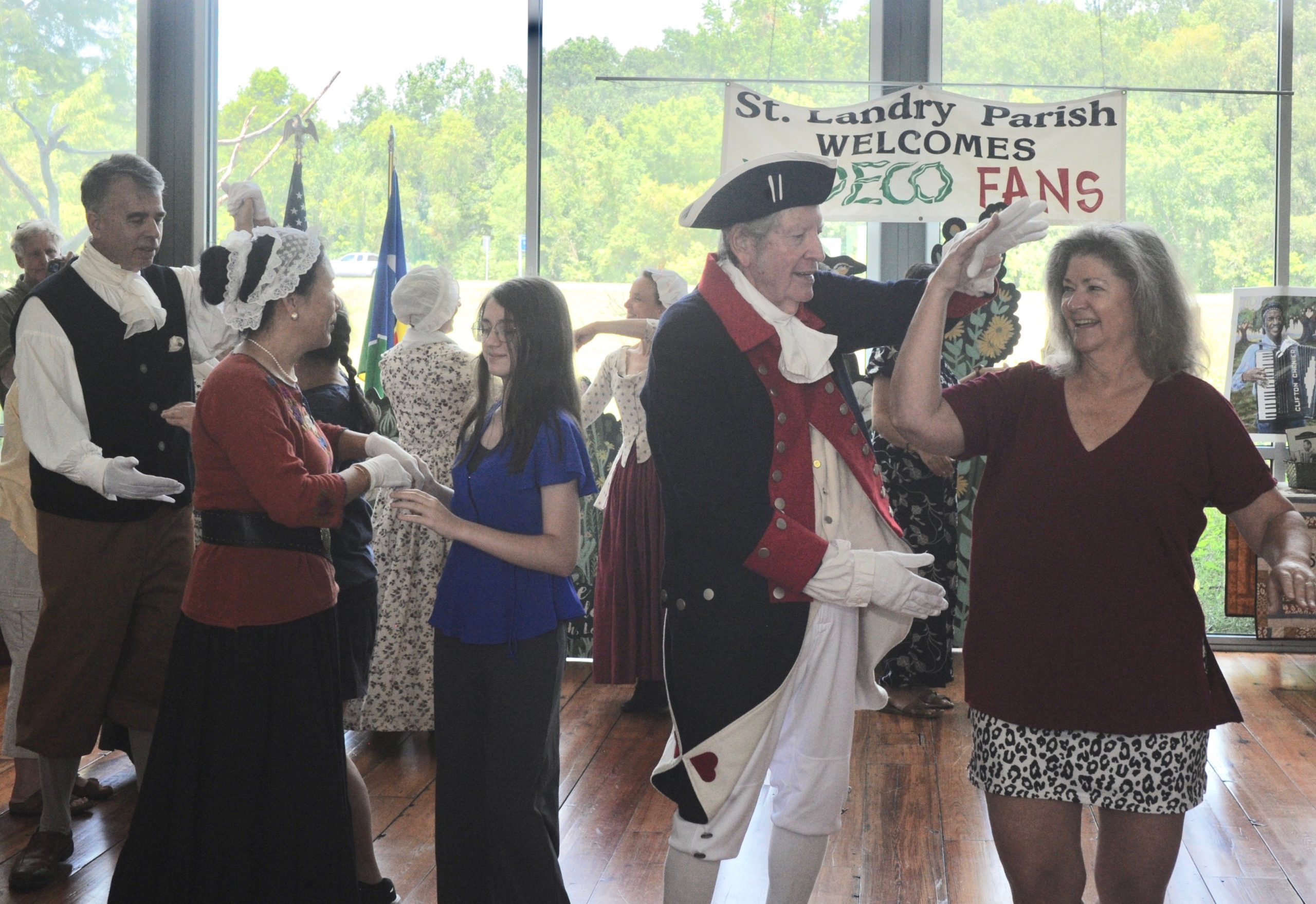
Instead the St. Landry Parish Tourist Center focused a lens on 1700’s social entertainment, where men wearing high socks and knickers guided women dressed in their caps, long skirts and high-necked blouses gracefully twirled, bowed and held hands in choreographed patterns.
The synchronized, balletic movements were orchestrated instrumentally by a homemade flute, mandolin and acoustic guitar, as the Baton Rouge-based Vintage Dancers recreated group dancing scenes from Revolutionary War America.
Those who attended the event sponsored by the St. Landry Preservationists Inc., viewed popular dances like the Circle Walz and Yankee Doodle that were used by American colonists over 250 years ago.
The parish preservationist group also plans to sponsor several other related events tied into the American 250 celebration later this year.
Preservationist president James Douget said the Dancers spent time after the Saturday production touring the Michel Prudhomme Home in Opelousas, a 1790’s home under the care of the non-profit organization which formed in 1976.
Later during the program, many of those who attended became more voluntarily interactive and joined the historic dancers in several of the movements which were popular as before the colonists engaged the British in several years of war.
Marguerite Gravois, spokesperson for the Dancers who perform nationally and in the Canadian Provinces, said the Saturday performances targeted the 1750’s, when dancing was already embedded in American culture.
Dances once popular in Europe were often hosted in barns or large halls in urban centers. Those occasions also served as a convenient meeting place for both men and women, who otherwise had little opportunity to socialize, Gravois said.
Some of the dances, Gravois noted, encouraged switching partners and interlocking arms and hands as a way of making eye and light physical contact.
The Vintage Dance group, said Gravois, has done extensive research to provide an authentic experience along with using the musical notes for instruments like the flute, violin and harpsichord, which were popular in early America.
Although it may not have always been evident, those attending the colonial dances used the opportunity to converse with their partners, introduce themselves and perhaps furtively flirt with one another as they glided across the wooden beams.
The Circle Walz was an example of that social phenomenon, Gravois said, as the types of dances also opened chances for the participants to end up with a variety of partners, increasing social interaction..
Gravois described the centuries-old dances as geometry on the dance floor, as arms, hands and legs were often pointed in prescribed directions.
Douget said following the event that the Vintage Dancers have expressed a willingness to perform during one of the Michel Prudhomme-hosted spring events and perhaps demonstrate a number of dances that were popular prior to the Civil War.