It’s Now A New Sales Tax
BOBBY ARDOIN
St. Landry Now.com Editor
The citywide 1-cent sales tax election that will presumably be placed before voters Aug. 16 is no longer being identified as a renewal, because the existing tax expires in 12 days.
According to the agenda published by the city administration on Monday, the proposed sales tax is described as a “new tax,” which if approved, will be collected for the next 50 years.
The current 1-cent sales tax, first passed in 1975, is set to expire May 31 after no action by either the city administration or the Board of Aldermen was taken to call a renewal election.
The Board of Aldermen is scheduled to vote on whether to proceed with the August election proposition and other issues involving the sales tax during a Thursday at City Hall meeting starting at 5 pm.
Also the published meeting agenda shows that if the resolution is passed, the city will start collecting the 1-cent sales on Sept. 1, with anticipated revenues of about $5.96 million during the first 12 months.
The end of the Opelousas city budgetary year is Aug. 31.
Originally the city administration had proposed in writing that if passed the sales tax would be worded as a tax that would be collected in perpetuity or indefinitely.
That initial wording is now off the table.
Actually the 2024 city audit shows that the city has an active perpetuity tax that was passed in 1993. That tax, which generated about $1.1 million in 2024, is dedicated for construction, acquisitions and improving fire, police and street facilities.
Continuing to allow the city to collect the same 1-cent sales tax has generated during the last six weeks, an onslaught of social media discussion and accusations.
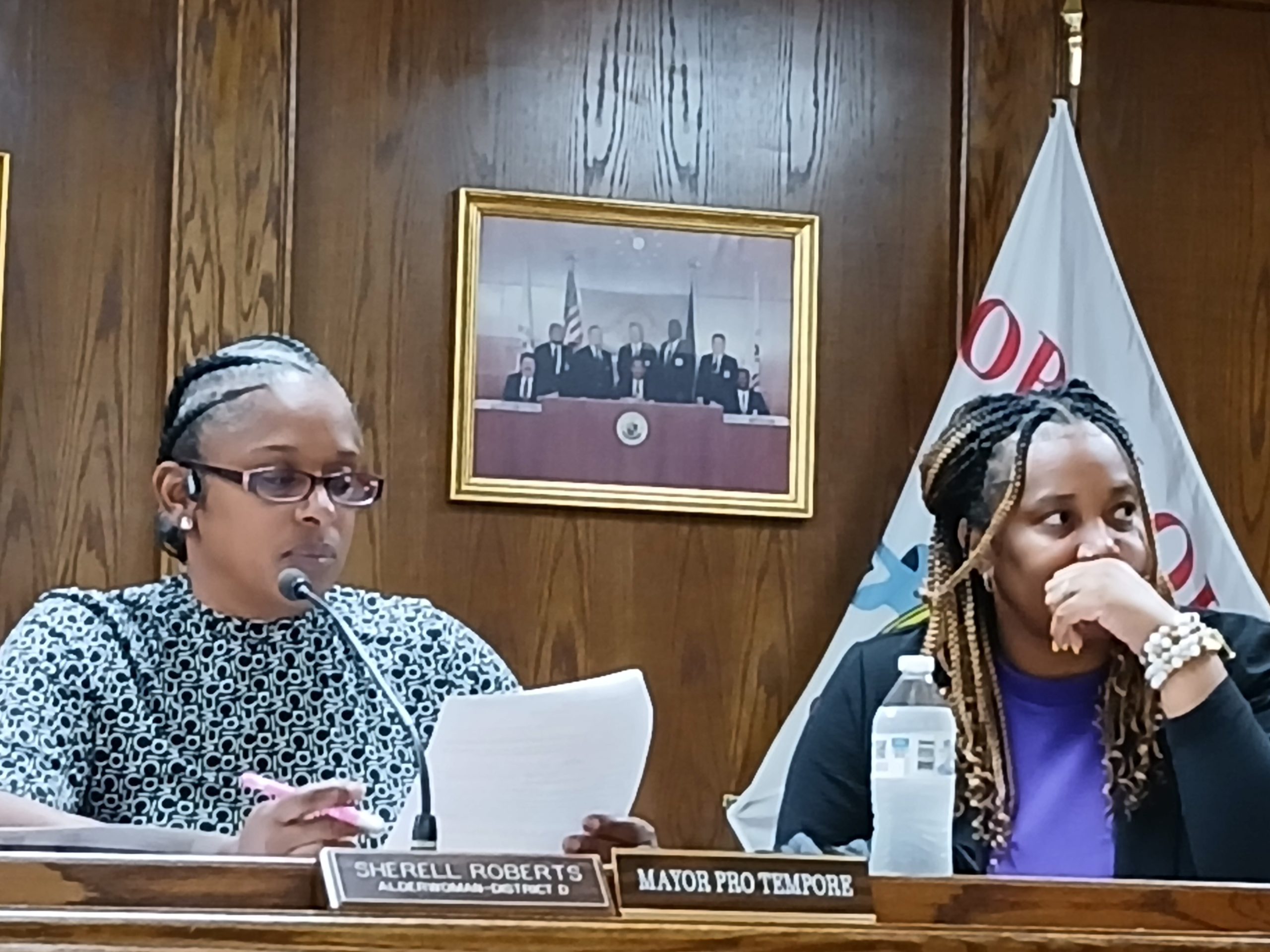
At the end of a Board of Aldermen meeting last Tuesday night two aldermen – Marvin Richard and John Guilbeaux – addressed voters who might consider casting “no” ballots Aug. 16.
The two aldermen reminded voters that city services will decline, with personnel layoffs and salary cuts will also be imminent repercussions if the tax is not passed.
Procedural Issues
Other matters scheduled to be resolved during the Thursday meeting include a bond attorney appearance before the State Bond Commission in order to request a new sales tax application.
The Board, according to the agenda, will be required to vote on whether to approve the Lafleur and Laborde Law Firm as special bond counsel that is expected to request that the funding of the tax be placed into bonds.
Also the bond counsel is expected to ask the Bond Commission for approval and authority to hold the special election on a Saturday that was not previously designated for an election, the agenda says.
What We Don’t Know
What the city administration has not discussed – at least publicly – is whether city officials were apprised earlier this year by the Secretary of State or parish election officials that the current tax was set to expire on May 31.
At this point we also don’t know what a special election will cost the city.
When did the city auditors inform the administration about the tax expiration?
What We Know
Mayor Julius Alsandor has said previously that it costs the city an estimated $80,000 each day to run Opelousas.
Alsandor said that the city collects about $10,000 daily in order to compensate for the operation.
The auditors mentioned in April that the sales tax now represents about 29 percent of the city’s budget. Last year that 1-cent tax revenue accounted for more than $5 million, the auditors have indicated..
The sales tax, if passed on Aug. 16, will be used according to the agenda item, for a variety of purposes that include infrastructure, salaries and construction.
The annual audit approved by the Board of Aldermen during an April meeting shows that city auditors annually include a sentence inside the audit report that shows the current sales tax was scheduled to expire May 31.
That statement can be found on Page 31 of the 2024 city audit posted on the State Legislative Audit website in April.
Both the city administration and each member of the Board of Aldermen were provided copies of the audit report and were provided extra time to ask questions before approving the document during a special meeting.