Hunting For History
BOBBY ARDOIN
St. Landry Now.com Editor
There are still tangible traces of the Civil War remaining in St. Landry Parish and all you have to do, says Opelousas attorney Tommy DeJean, is grab a metal detector and begin your search.
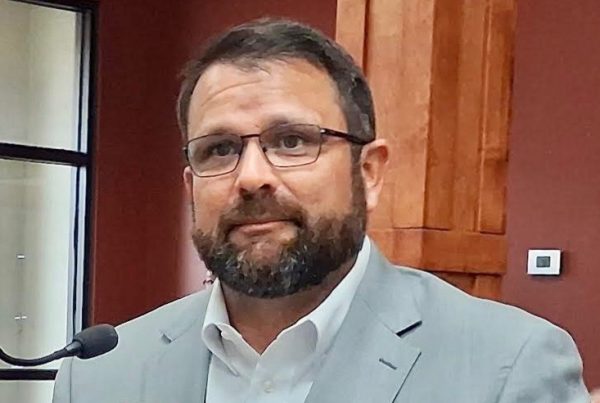
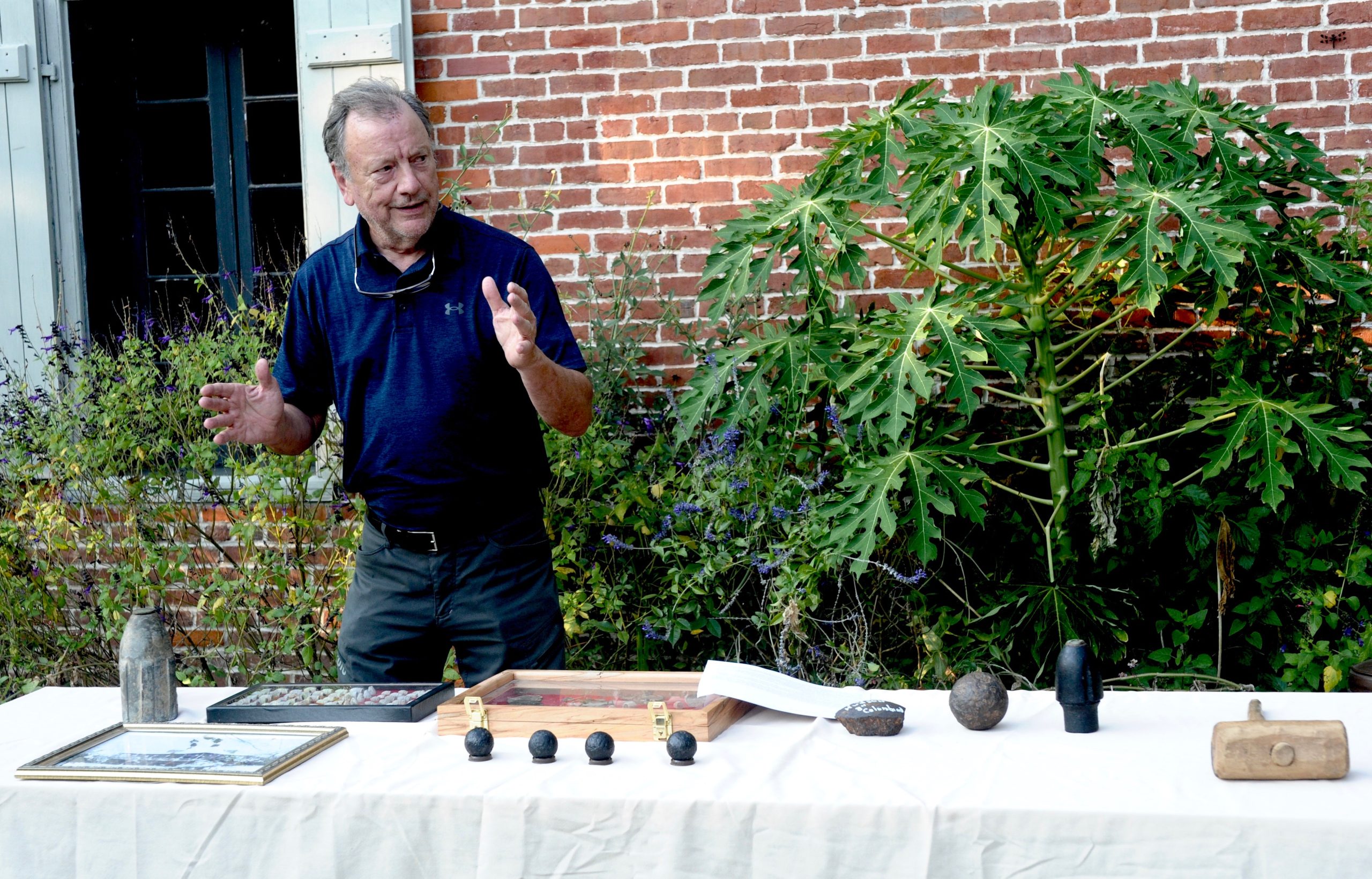
DeJean revealed his penchant for Civil War memorabilia discovery on Thursday night, as he entertained a Michel Prudhomme Home audience with his stories of artifact retrievals that he has made during the last decade.
The 130-year-old house next to Opelousas General Hospital, is now undergoing extensive restoration by the St. Landry Preservationists.
It was more than an appropriate setting for his twilight presentation, DeJean said, since Gen. Nathaniel Banks seized the house and its property for his headquarters company when Union soldiers occupied Opelousas in 1863.
Just a few blocks away was the former Louisiana governor’s mansion, destroyed by arson several years ago, which was used as a temporary state capital briefly in 1862.
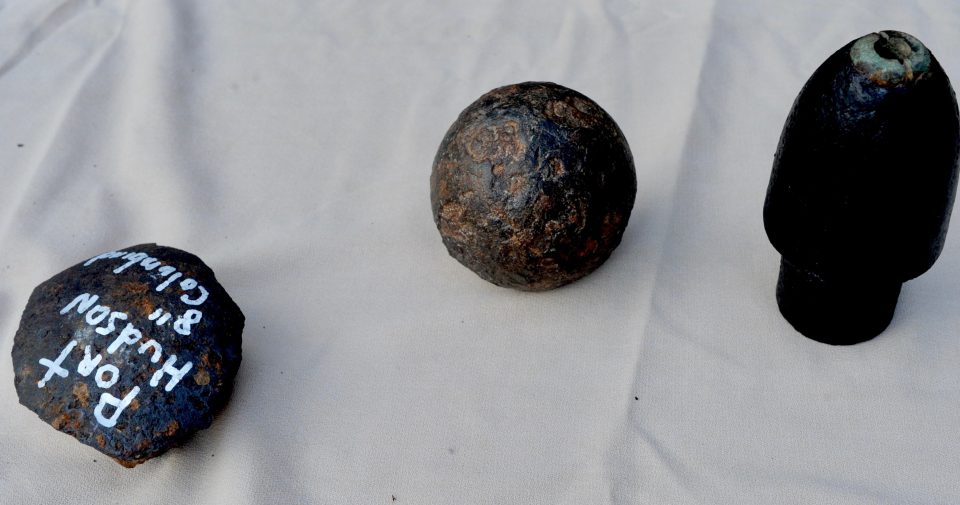
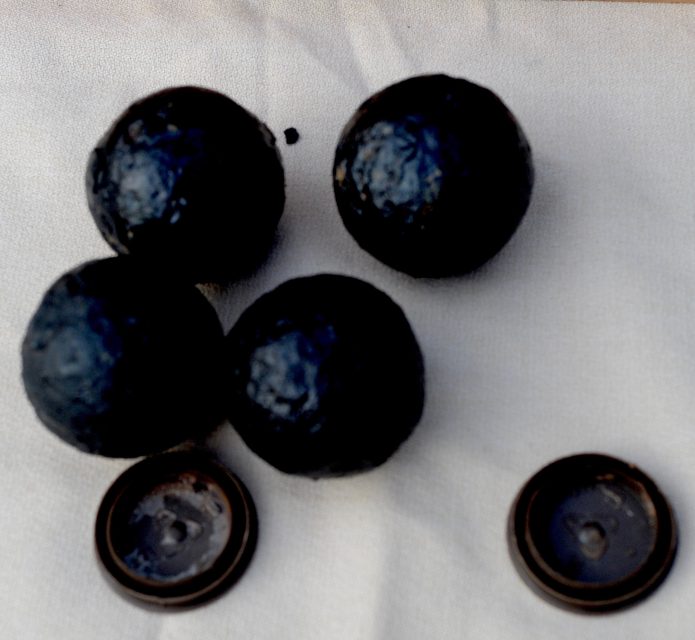
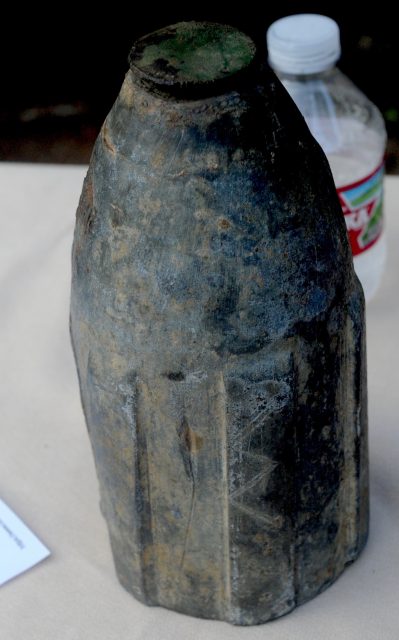
Dejean said he never completely understood how deeply embedded the Opelousas-area was in Civil War history, until he began researching the area, where he has extracted numerous bullets, uniform buttons, cannon balls and percussion weapons.
Those items were on display during the presentation from DeJean, as he provided knowledgeable details and explained their military significance.
Banks, DeJean pointed out, marched about 30,000 troops through Opelousas at various intervals between 1863 and 1864.
Those soldiers were usually indiscriminate about leaving remnants of their occupation each time and taking what they wanted from local residents.
“Since Opelousas at the time had maybe 3,500 people, it’s hard to imagine the impact of having 30,000 soldiers located in various camps around the town, needing supplies and water for their animals,” DeJean said.
In addition to the Prudhomme Home and St. Landry Catholic Church property, DeJean said he has identified other major Union campsites near Lou Ana Foods and near Super 1 just south of the city.
There is also an historic site marker on La. 182 just beyond Judson Walsh Drive, pointing out an 1863 skirmish between Confederate troops and Union soldiers who were making the march from Brashear City (now Morgan City) to Opelousas.
Although there was Confederate resistance to the Union occupation in the parish and a major battle in the Sunset-area along Bayou Bourbeau, DeJean pointed out that most of the local resistance came from Texas regiments.
Louisiana regiments formed and left in 1861 and were fighting on battle fields in Virginia, Tennessee and outside the state.
DeJean showed his audience a cannon ball extracted from bayou banks around Arnaudville, and mini-balls or bullets, which he added are plentiful, since they were normally discarded because of their uselessness after becoming wet.
There are other cannon balls and items that DeJean has uncovered as he has expanded his investigations to private properties around Port Hudson.
Uniform buttons are particularly interesting, DeJean said, since usually they possessed insignias indicating the states where soldiers were from.
“For instance, if you were from Louisiana, you might have a pelican imprint on a button, or if you were with a Texas or Mississippi regiment, there would be a star. With South Carolina, there was a palmetto,” said DeJean.
DeJean, whose great grandfather was evidently killed somewhere on a battlefield outside Louisiana and never returned home, said one of his prized Civil War acquisitions is a photo of Banks standing on the porch of a Nicholson-family ancestor in nearby Washington.