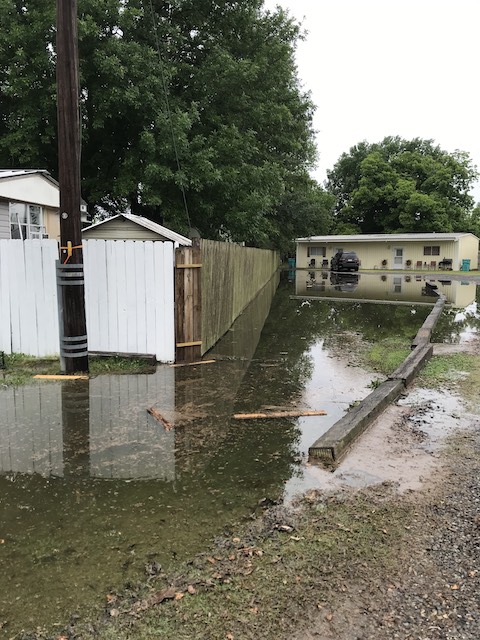
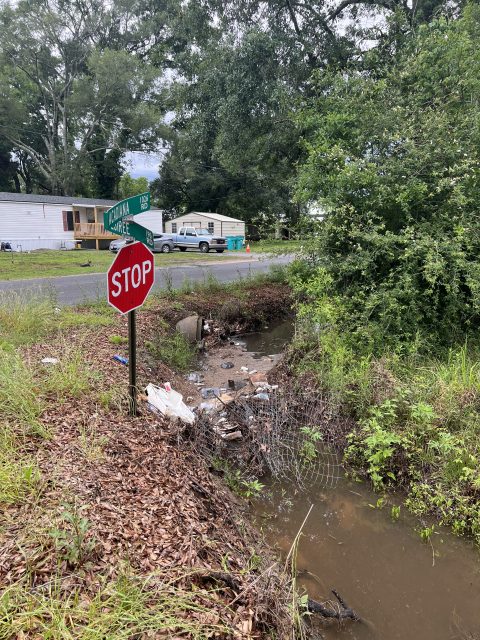
Photographs: Courtesy of St. Landry Parish President
BOBBY ARDOIN
Editor/Consulting Writer
Two consecutive nights of heavy rainfall placed St. Landry Parish government work crews into action again on Saturday as workers cleared roadway ditches, culverts and underneath bridges in order to relieve high water situations.
Parish president Jessie Bellard said rain estimates as high as five inches were recorded in some areas of the parish during the two episodes of severe storms which passed through St. Landry during the early morning hours of each day.
“Fortunately the water in most areas goes away quickly, but you never know what to expect with a forecast. I think we will be good for (Saturday night). The weather forecasts for Monday and Tuesday indicate there is more rain on the way, so we are doing all we can right now,” Bellard said on Saturday.
Bellard said the water abatement process on Saturday was concentrated mostly in the Swords area and again in Port Barre around Rayne Road.
“We worked last year on raising Rayne Road. If we hadn’t done that, then the road would have been under water on Saturday,” said Bellard.
Most of the work on Saturday Bellard said, was in response to cleaning ditches and culverts. Then there was the issue of releasing water that was trapped underneath bridges due to debris, said Bellard.
Bellard said the two crews on Saturday divided their efforts.
“We had one crew on culverts and another on the bridges,” Bellard added.
On Friday the Eunice, Washington and Port Barre areas, Bellard said, were particularly victimized by water issues, following an estimated three inches of rain that occurred during a two-hour period.
In Eunice the roof on the Vibrant Nails and Spa collapsed, severely damaging the business.
Water problems in some areas of the parish are also routinely caused by canals that need dredging. Laterals leading to the canals also need habitually dug and cleaned, Bellard said.
Bellard said that in some areas water is experiencing difficulty moving from roads into ditches because laterals require more cleaning.
Combating water intrusions in some areas remains a chronic issue, Bellard said.
“It’s a constant fight, but I think what we have done with our ditch digging program is helping. You want to keep the ditches free so water stays off the roads,” Bellard added.