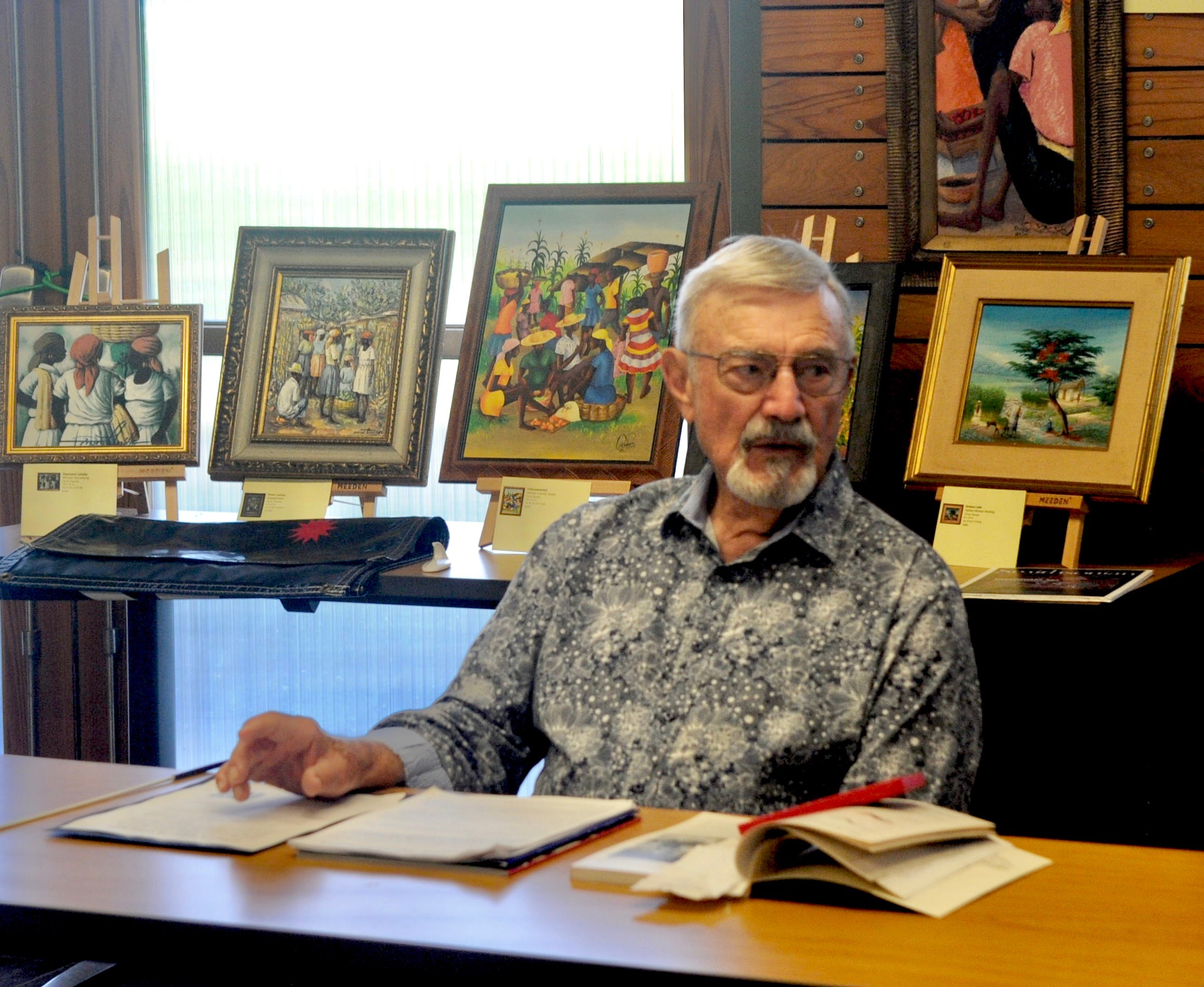
Art Exhibit Details Haitian Culture
BOBBY ARDOIN
Editor/Consulting Writer
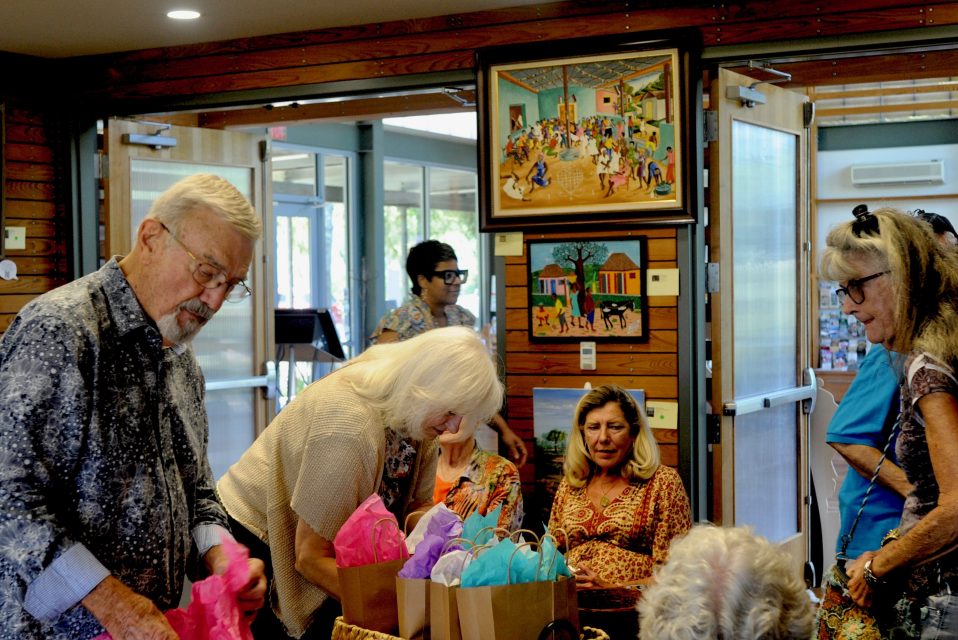
A portion of the largest worldwide collection of Haitian paintings was on public display Saturday, as its cultural connection to Southwest Louisiana was described in detail during a reception at the St. Landry Parish Tourist Center.
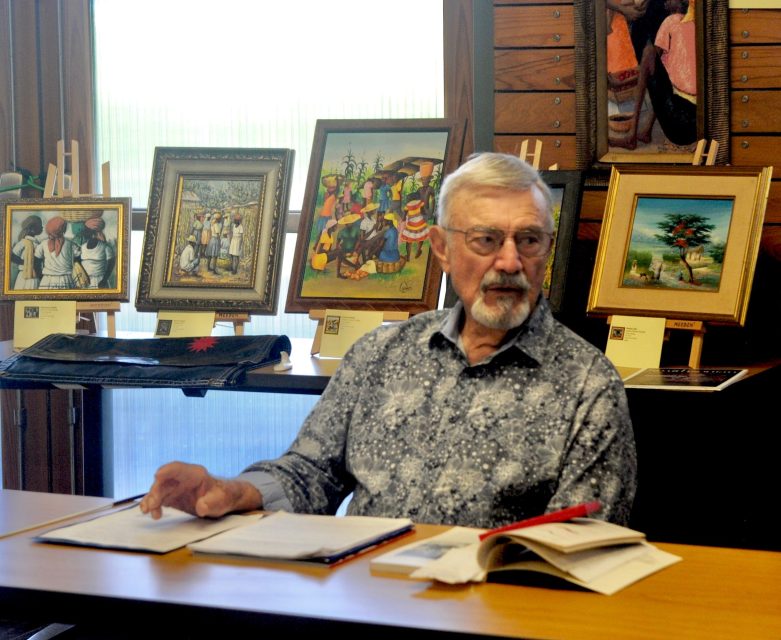
Glenn Stokes, who owns over 3,000 pieces of Haitian art, explained during an exhibition reception audience how the history of the Caribbean island has been revealed more frequently on canvas rather than written documents.
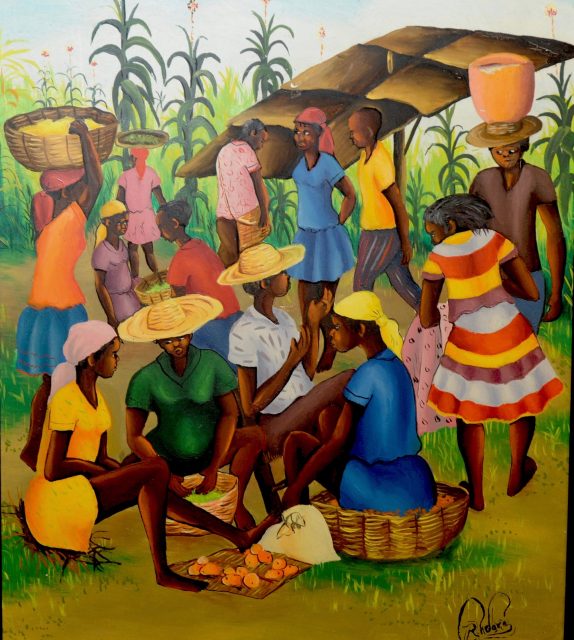
Stokes, who acquired an appreciation for Haitian art while frequently visiting Haiti on business beginning almost 50 years ago, said that artists depicting island life have created a unique style which relies heavily on primary color vibrancy of reds, blues, greens and yellows.
A percent of Haitian artwork that he has sold, Stokes pointed out, has been remitted to the island to help pay for educational and medical needs.
Stokes said Haitian art has continued to enjoy a universal appreciation and popularity by collectors and arts.
The Smithsonian and New Yorker magazines have featured works painted by Haitian artists on recent covers, Stokes indicated.
“There is no other country that has art like it. You can see it right away. Art from Haiti has its own style that is distinctive and easy to identify,” said Stokes.
The exhibit paintings, which are for sale, have dominated a section of the Tourist Center for nearly two months.
Most of the paintings show familiar aspects of Haitian life throughout the past four centuries.
Stokes said the exhibition, which has been shown recently in several major American cities, will continue on display for the next two weeks.
Hopefully, Stokes said, St. Landry school children will be available to view the exhibition before it is removed from the Tourist Center.
Many of the paintings from the Tourist Center exhibition show typical Haitian agricultural scenes, such as workers planting and harvesting the most productive island crops such as cotton, sugar cane and indigo, which became valued New World commercial commodities, Stokes said.
Voodoo religious worship, widely practiced in Haiti throughout its history, is noted in many of the collection paintings.
Those attending the event posted smiles as Stokes pointed out a canvas that shows gamblers wagering their bets and yelling for their favorite birds during a festive cockfight event
Stokes also explained the connection that St. Landry and several adjoining parishes have with Haiti.
The island, originally known as Saint Domingue, experienced a major fire and an extended 1790’s slave revolt, which caused several thousand of Haitian inhabitants to leave and eventually settle in New Orleans and St. Martin, Iberia, Avoyelles and St. Landry parishes, said Stokes.
“Many of the family names that are familiar to us, such as Chenier Martel, Vital, Segur, Pecot, Journee and Jardoin are rooted in Haiti,” Stokes added.
Throughout his numerous visits, Stokes said he and his wife Yvonne developed a special love for the Haitian people, who he admitted have remained resilient despite a series of political upheavals and natural disasters such as earthquakes and severe tropical storm activity.
It’s been painful, Stokes pointed out, to see Haiti involved in recent turmoil which has featured rioting and interrupted education, imprisoned many and hurt basic medical care.
“It’s been an unlucky place to be. The recent disasters there have made me cry,” Stokes added.