Town of Melville Fights for Financial Stability, Infrastructure Renewal
Derek Shore, Communities Unlimited, Staff Writer
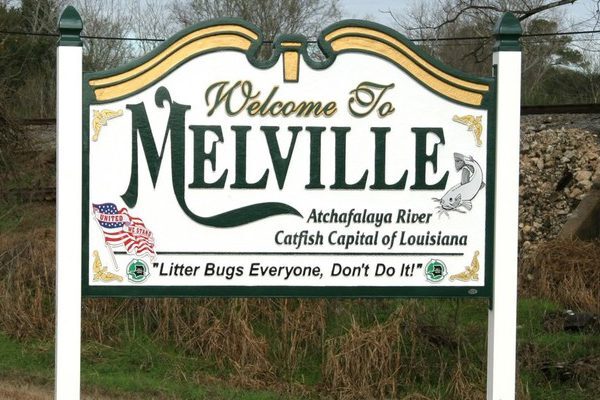
Melville, a small fishing town of 746 residents in St. Landry Parish, Louisiana, has faced decades of
administrative and infrastructure challenges. Situated along the Atchafalaya River, the town struggled
with incomplete financial records, stalled federal projects, and deteriorating water and sewer systems.
When Mayor Caretta Robertson took office on January 23, 2023, she inherited a town rich in history but
burdened by mismanagement — scattered files, outdated records, and financial instability were
hampering revitalization efforts.
For years, Melville had difficulty accessing federal and state resources to improve its infrastructure. In
December 2018, the town secured $4.39 million from USDA Rural Development to modernize its failing
water system, identified as one of Louisiana’s “Most Distressed” drinking water systems. The town also
received a sewer loan, highlighting its urgent infrastructure needs. However, financial mismanagement
and compliance issues prevented progress on these critical upgrades.
CU Steps In
Recognizing the urgency of the situation, the Community Infrastructure Team at Communities Unlimited
(CU) stepped in to help town leadership navigate these roadblocks. CU’s involvement began in July 2023
when former Louisiana State Senator Donald Cravins Sr. connected with Mayor Robertson, which led to
an initial meeting with CU’s Louisiana State Coordinator, Chris Brunson, and Community Environmental
Management Specialist, Stacey Scarce. They quickly uncovered severe financial and administrative
deficiencies, including uncompleted audits, stacks of unprocessed customer checks, uncollected water
payments, and a lack of reserve funds for infrastructure projects.
Stacey Scarce took the lead in addressing these issues, providing direct technical assistance to bring
Melville back into compliance and restructure its financial processes. One of her first tasks was
conducting a rate study, which revealed significant gaps in financial records and the town’s inability to
collect adequate revenue. Stacey also helped navigate the Community Facilities (CF) grant process,
ensuring that Melville could submit a new application for a tractor after the stalled CF application for a
backhoe and excavator had to be rejected. While there is no guarantee they will receive the grant, as
funding ran out last year when it was initially submitted, there is hope that it will be funded in 2025.
Melville’s financial struggles extended beyond missing records. The town’s outdated municipal billing
system had failed to collect revenue for years, leading to a growing deficit. By 2021, inconsistent billing
practices and unmonitored accounts left reserve funds empty for over a decade. CU worked with town
officials to implement a long-overdue rate increase and train staff on Excel for late payment tracking.
These changes allowed Melville to better monitor revenue collection and stabilize its finances.
With CU’s assistance, the town also overcame administrative hurdles that had previously stalled its
USDA water loan. This progress enabled Melville to apply for a Water Sector Grant through the Louisiana
Department of Environmental Quality’s (LDEQ) Clean Water State Revolving Fund (CWSRF). Their
persistence paid off in February 2025 when Melville was awarded an additional $2.8 million in state
funding to complete its long-awaited water infrastructure project.
Infrastructure Progress and Financial Turnaround
Thanks to these efforts, Melville is now making tangible progress. Nearly all of its aging water lines will
be replaced, addressing long-standing leaks and inefficiencies. Water meters will be installed for the first
time to prevent illegal tapping and ensure accurate billing. The town’s outdated water main will be
upgraded, and a rusted, nonfunctional water tower will be removed. Fortunately, Melville’s other water
tower remains operational, eliminating the need for a costly replacement.
Financially, the town has made significant strides. Before CU’s assistance, Melville’s utilities were
operating at a loss, with an $86,459 shortfall for the fiscal year ending September 30, 2023. With CU’s
support in financial restructuring and rate adjustments, the projected loss for 2024 was reduced to
$44,235, cutting the deficit nearly in half. Now, just four months into the 2025 fiscal year, Melville has a
$9,533 surplus and is projected to end the year with a $28,599 surplus. These improvements highlight
the effectiveness of CU’s work in helping the town regain financial stability and move from operating at
a deficit to achieving sustainable growth.
Additionally, CU’s assistance in bringing Melville’s sewer loan and grant into compliance was crucial for
moving forward with its water system upgrades. With compliance issues resolved, the town is now
progressing with a $1,166,000 USDA loan and a $3,224,000 USDA grant for water infrastructure
improvements. The upcoming bid process represents a major milestone in this multi-year effort.
A Path Toward Self-Reliance
CU and USDA Rural Development have a longstanding partnership supporting rural communities, and
Melville is a prime example of this collaboration in action. Stacey worked closely with USDA Loan
Specialist Nnika Tinney-Davis to guide local officials through compliance requirements, ensuring that
Melville remained on track for future funding.
To further strengthen the town’s financial future, Stacey developed a comprehensive balance sheet,
providing officials with a clearer understanding of their financial standing. Mayor Robertson used this
data to present a recovery plan at a town council meeting, addressing past loan denials and outlining a
sustainable path forward. Stacey also conducted a new rate study and updated Melville’s Emergency
Response Plan (ERP), preparing the town for its transition to metered water usage. This shift will
improve revenue collection, enhance financial stability, and support long-term sustainability.
The additional $2.8 million in state funding represents a pivotal moment for Melville, making it possible
to complete long-overdue infrastructure improvements. These efforts mark a turning point for the
community, proving that even deeply entrenched issues can be resolved with expertise, persistence,
and collaboration.
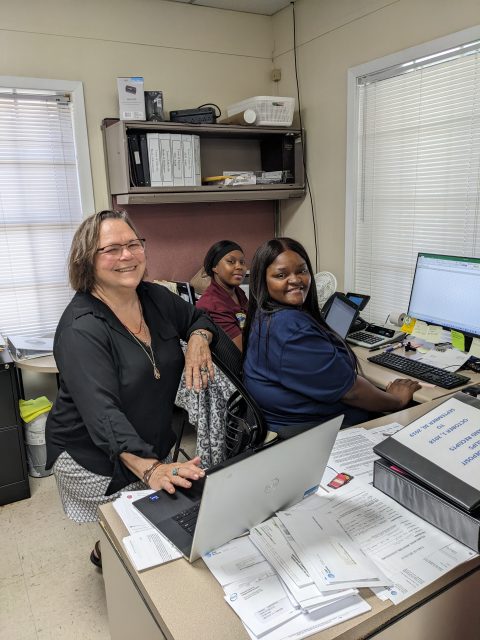
Mayor Robertson, Clerk Khadiejah Williams, and Assistant Clerk Shakita Brown have been instrumental
in implementing these changes, despite the political risks involved, such as the need to raise water rates.
Their dedication has helped secure a future for Melville, ensuring that critical infrastructure projects
move forward. However, their work often goes unrecognized.
Mayor Robertson expressed her gratitude to the town clerk and assistant clerk, emphasizing that
Melville wouldn’t be where it is today without them. She highlighted the town’s progress since 2023,
stating that they have achieved about 85 to 90% of her goals for Melville.
“We love our town. We work hard to get it where it needs to be, and we’re not stopping,” said Caretta
Robertson, Mayor of Melville. “There’s still a lot to accomplish to make Melville a better place to live.
I’m so proud of the town and of the people working with me. Even if you can’t always see it from the
outside, behind closed doors, we’ve made real progress. We’re off the non-compliance list, we’re up to
date with our audits, and we don’t have state representatives breathing down our necks anymore
because they see the great work we’re doing. We are going to keep pushing to make the town better.
With the team I have, I know we’re going to do it. I have no doubt about that.”
Mayor Robertson confirmed that the water meters are expected to arrive in 2025, bringing Melville one
step closer to achieving its goals. Once the bidding process for the meters is finalized, attention will turn
to the next challenge — improving the town’s roads, a crucial step in strengthening the community’s
foundation.
But Melville’s journey is about more than infrastructure; it’s about reclaiming control of its future.
Through strategic planning and perseverance, local officials are not just rebuilding — they are redefining
the town’s path forward. With CU’s support, Melville is steadily moving toward self-reliance, proving
that resilience and vision can transform a community.
“Melville has been working on this for years with nothing moving forward,” said Stacey Scarce,
Community Environmental Management Specialist at Communities Unlimited. “But now, things are
happening. It’s such a big deal that they’re finally going to get this done. Melville is such a cute little
town right on the river, and it deserves the investment. They need it.”
Added Mayor Robertson, “Stacey is on a whole different level — she’s right up there with Khadiejah and
Shakita. She helps us so much. As long as I’m here, I’m keeping her with me. If I could hire Stacey and
put her on the payroll, I would. When she’s on the phone, all you have to do is listen and take her lead
— she will guide you in the right direction. I love her to death. She is truly amazing.”