Armory Project Aims
At Vet Suicide Prevention
BOBBY ARDOIN
St. Landry Now.com Editor
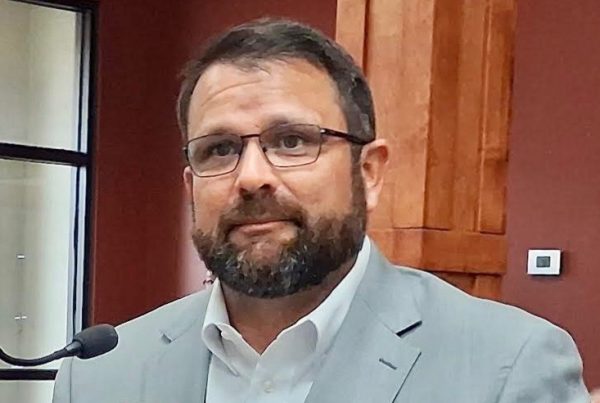
Caleb Morse has experienced more than one early morning phone conversation that involves a military veteran attempting to commit suicide by pulling the trigger of a firearm..
It’s usually post-military experiences that lead to depression and affect veterans who contemplate suicides,says Morse, who has been developing a nationwide network that allows certified firearms dealers to temporarily hold veterans’ weapons which might otherwise be used for self-inflicted deaths or harm to others.
Morse introduced the Opelousas Noon Rotary Club on Tuesday to the Armory Project, which began in Louisiana and now receives assistance from the Veterans Administration.
The non-profit program, which now has its own website, began with statewide leadership from Morse, along with others, provides firearm storage and other suicide prevention resources during mental health crises.
Now Morse, after using thousands of dollars of his own money, has secured three firearms safes containing 250 firearms that have been surrendered primarily by veterans.
The firearms given to him and other firearms dealers, said Morse, can be held indefinitely at no charge or bought on consignment.
Morse said he often cleans the weapons placed in his possession or repairs them at no cost.
The number of suicides in Lousiana is staggering, Morse noted, with a high percentage of that committed by veterans.
Admittedly Morse had his own one-year struggle with depression after serving multiple tours with Army combat teams, the National Guard and later working with a military contractor in Iraq.
Morse told the Rotarians that he soon realized how serious other veterans were having with PTSD-related problems when a veteran he knew traveled several thousand miles to the house Morse owned and asked Morse to keep his firearms safe.
That was just the beginning.
“He and other people started showing up asking to store their guns and it became clear that other veterans needed help,” said Morse, a federally-licensed firearms dealer and gun range owner who lives in the Lafayette Parish area.
Against the advice of several attorneys who warned Morse of potential liability issues if the guns in storage were used in a harmful way after they were given back to their owners, Morse decided it was more important to work with veterans and “try to build them up.”
Louisiana lawmakers however stepped in and helped clarify that issue according to Morse, by passing a state law which generally absolves gun shops from liability from guns previously placed in their possession and then causing death or injury after being given back.
Morse, who established the Armory Project in Louisiana and then advocated for similar programs in other states, estimates that he has helped 15 to 20 veterans who were perhaps on the verge of suicide.
“There has only been one that I couldn’t help. I think we all know somebody who needs help and maybe what we should do when that happens is try to sit down and have a conversation,” Mose pointed out.
Normally veterans who have been turning in their guns to dealers nationwide, receive a receipt or similar verification that they have voluntarily turned a firearm into a gun shop, said Morse.
Morse has provided interviews about the Armory Project with CBS News and the Wall Street Journal in addition to talking with state metropolitan newspapers and civic organizations like Rotary.
“You won’t see us advertising on billboards or television. We just want to gather our resources and try to make a difference and help people. We don’t advertise. With the VA, it’s been a problem to get them to be aware of it, but they are now assisting us,” Morse added.